Nicholas Strasser MD

Nicholas Strasser MDNicholas Strasser MDNicholas Strasser MD
Home
Conditions we treat
FAQ
  • Preparing for Surgery
  • Post Surgery Instructions
  • Swelling After Surgery
  • Foot and Ankle Procedures
  • Nutrition and Surgery
Athletes Corner
Legal Consulting
Platelet Rich Plasma
Rehabilitation Protocols
Blog

Nicholas Strasser MD

Nicholas Strasser MDNicholas Strasser MDNicholas Strasser MD
Home
Conditions we treat
FAQ
  • Preparing for Surgery
  • Post Surgery Instructions
  • Swelling After Surgery
  • Foot and Ankle Procedures
  • Nutrition and Surgery
Athletes Corner
Legal Consulting
Platelet Rich Plasma
Rehabilitation Protocols
Blog
More
  • Home
  • Conditions we treat
  • FAQ
    • Preparing for Surgery
    • Post Surgery Instructions
    • Swelling After Surgery
    • Foot and Ankle Procedures
    • Nutrition and Surgery
  • Athletes Corner
  • Legal Consulting
  • Platelet Rich Plasma
  • Rehabilitation Protocols
  • Blog
  • Home
  • Conditions we treat
  • FAQ
    • Preparing for Surgery
    • Post Surgery Instructions
    • Swelling After Surgery
    • Foot and Ankle Procedures
    • Nutrition and Surgery
  • Athletes Corner
  • Legal Consulting
  • Platelet Rich Plasma
  • Rehabilitation Protocols
  • Blog

PRP Treatment for Ankle Arthritis:

Platelet-Rich Plasma (PRP) Injection Protocol


Ankle Osteoarthritis


Overview

Platelet-Rich Plasma (PRP) injections are used to treat ankle osteoarthritis by delivering a concentrated sample of the patient’s own platelets and growth factors directly into the joint. These biologic signals may help reduce inflammation, improve joint environment, and potentially slow cartilage degeneration.

PRP injections are typically performed as a single injection, with the option to repeat at 6 weeks if symptoms persist or improvement is incomplete.

Clinical studies have shown PRP injections may improve pain and function in ankle osteoarthritis compared with hyaluronic acid or placebo in selected patients.


Pre-Injection Guidelines

To maximize the biologic activity of PRP, certain medications should be avoided before treatment.


Avoid Anti-Inflammatory Medications

Stop NSAIDs (anti-inflammatory medications) for:

7 days before injection

Examples include:

  • Ibuprofen (Advil, Motrin)
     
  • Naproxen (Aleve)
     
  • Meloxicam
     
  • Diclofenac
     
  • Celecoxib
     

NSAIDs may interfere with platelet signaling and reduce the effectiveness of PRP.

Acetaminophen (Tylenol) is allowed.


Hydration

Drink plenty of fluids the day before and the day of the procedure to improve blood draw quality.


Day of Injection

The PRP injection is typically performed in the office using sterile technique.

Steps include:

  1. Blood draw
     
  2. Centrifugation to isolate platelet-rich plasma
     
  3. Ultrasound-guided injection into the ankle joint
     

Patients typically go home shortly after the procedure.


Immediate Post-Injection Period

First 72 Hours

Mild soreness or a temporary increase in pain is common during the first several days. This represents an inflammatory response triggered by the growth factors in PRP.


Important Restrictions

Do NOT use ice for the first 72 hours.

Cold therapy may reduce the biologic inflammatory signaling that PRP is intended to stimulate.

Avoid NSAIDs during this period.

Pain can be managed with:

  • Acetaminophen (Tylenol)
     
  • Relative rest
     
  • Compression if helpful
     

Activity

Weight bearing as tolerated unless otherwise instructed.

Avoid:

  • Running
     
  • Jumping
     
  • High-impact activity
     

Gentle walking is encouraged.


Early Recovery Phase

Days 3–14

Pain Control


Continue to avoid NSAIDs for two weeks after injection.

Pain control options include:

  • Acetaminophen
     
  • Heat therapy after day 3
     
  • Gentle mobility
     

Activity

Low-impact activity is encouraged.

Recommended:

  • Walking
     
  • Gentle range of motion
     
  • Stationary cycling
     

Avoid:

  • Running
     
  • Jumping
     
  • High-impact activity
     
  • Heavy strength training
     

Progressive Loading Phase

Weeks 2–6


Patients may gradually increase activity.

Recommended activities:

  • Stationary cycling
     
  • Swimming
     
  • Elliptical trainer
     
  • Low-impact strengthening
     

Physical therapy may focus on:

  • ankle mobility
     
  • calf flexibility
     
  • proprioception
     
  • hip and core strength
     
  • gait mechanics
     

Avoid:

  • high-impact running
     
  • plyometrics
     
  • aggressive jumping activities
     

Reassessment

Week 6


Clinical improvement typically begins between 4–6 weeks after injection.

At the 6-week visit:

Options include:

  • Continue rehabilitation if symptoms improving
     
  • Consider repeat PRP injection if improvement is incomplete
     
  • Consider additional interventions if symptoms persist
     

Return to Activity

Low-impact sports may resume around 4–6 weeks depending on symptoms.

Higher impact activity (running, cutting sports) should be progressed gradually and based on pain response.


Expected Timeline of Improvement

Patients often notice improvement in:

Pain
Joint stiffness
Walking tolerance
Activity levels

Initial improvement may begin around 2–6 weeks, with maximal benefit sometimes occurring at 3 months.


Potential Side Effects

PRP is generally safe because it uses the patient’s own blood.

Possible side effects include:

  • Temporary pain flare (24–72 hours)
     
  • Mild swelling
     
  • Joint stiffness
     
  • Injection site soreness
     

Serious complications are rare.


Key References


Meheux CJ et al. Platelet-rich plasma versus hyaluronic acid for the treatment of ankle osteoarthritis. Foot & Ankle International. 2016.

Repetto I et al. Platelet-rich plasma injections in chronic ankle osteoarthritis: systematic review. Journal of Orthopaedic Surgery and Research. 2017.

Angthong C et al. Outcomes of intra-articular platelet-rich plasma injection for ankle osteoarthritis. Foot and Ankle Surgery. 2020.

Filardo G et al. Platelet-rich plasma in osteoarthritis. Knee Surgery Sports Traumatology Arthroscopy. 2015.
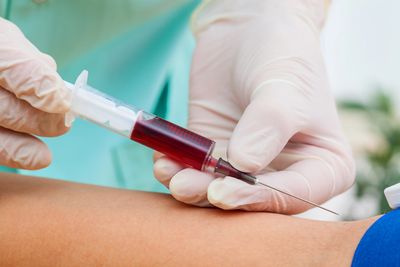
PRP for Ankle Arthritis Printable Version

Download PDF

Reviews

Connect With Us

Copyright © 2024 Sports Foot and Ankle Specialist - All Rights Reserved.

Powered by

  • Athletes Corner
  • Legal Consulting
  • Platelet Rich Plasma
  • Rehabilitation Protocols

This website uses cookies.

We use cookies to analyze website traffic and optimize your website experience. By accepting our use of cookies, your data will be aggregated with all other user data.

Accept